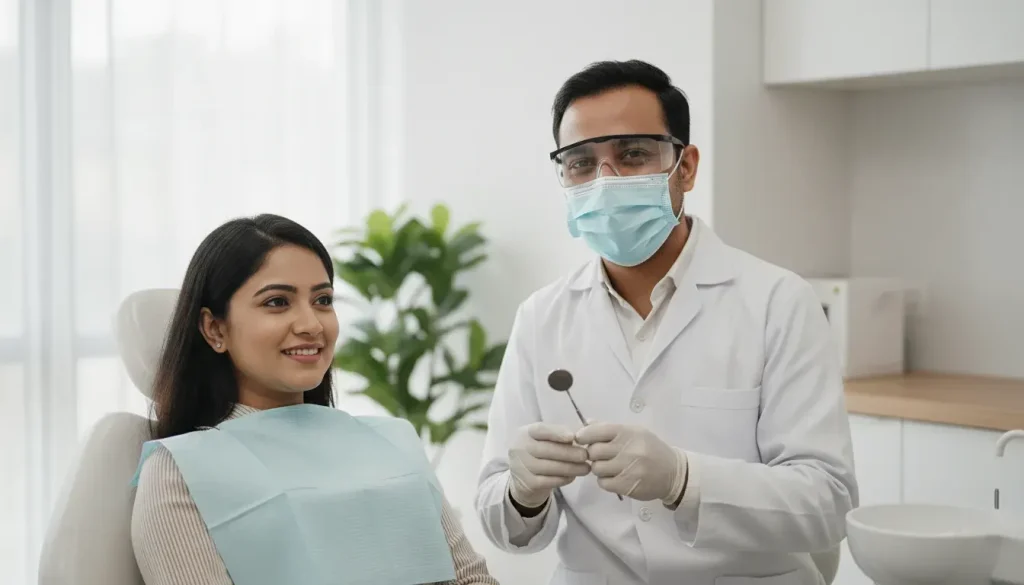
Finding a good dentist in Bangladesh doesn’t have to be a guessing game. The right dentist is one who is qualified, communicative, and works in a clean, well-equipped setting. This guide walks you through where to search, what to check, and how to decide — so you can book your first appointment with confidence.
Where to start your search for a dentist in Bangladesh
You have several practical paths to find a dentist near you:
- Online doctor directories and hospital websites — Platforms like Praava Health, Medinova, or general healthcare listing sites allow you to filter by location, specialty, and consultation fee. Many also show patient reviews and doctor profiles.
- Word-of-mouth — Ask family, friends, or colleagues who have had good dental experiences. Personal recommendations often carry more weight than online reviews.
- Local pharmacy recommendations — Pharmacists in your area usually know which dentists have a good reputation and reasonable fees.
- Google Maps — Search for “dentist” in your city, then check the clinic’s rating, photos, and hours. Look for recent reviews that mention hygiene and wait times.
What credentials should a good dentist have?
In Bangladesh, a qualified dentist holds at least a BDS (Bachelor of Dental Surgery) degree from a recognized university. Many also have postgraduate qualifications such as FCPS (Fellow of the College of Physicians and Surgeons) or MS (Master of Surgery) in a specialty like orthodontics, oral surgery, or periodontics.
Before booking, verify that the dentist is registered with the Bangladesh Medical and Dental Council (BMDC). You can usually check this on the BMDC website or by asking the clinic. A valid registration number is a baseline sign of legitimacy.
For complex treatments (e.g., root canals, braces, implants), look for a specialist. A general dentist (BDS only) can handle routine check-ups and fillings, but advanced care often requires additional training.
How to evaluate a dental clinic before booking
Once you have a shortlist, use this checklist to assess the clinic:
- Hygiene — Are the floors clean? Are instruments sterilized in an autoclave? Watch for reused gloves or dirty equipment.
- Equipment — A modern clinic should have digital X-ray (less radiation), an intraoral camera, and a well-maintained dental chair. Older equipment may mean less accurate diagnosis.
- Patient reviews — Read feedback on Google or the directory site. Look for repeated complaints about pain management, hidden costs, or rude staff.
- Staff behavior — Friendly, attentive staff who explain procedures and answer questions are a good sign.
Red flags: Unhygienic conditions, refusal to give a cost estimate upfront, or pressure to start treatment immediately without a clear explanation.
Find dentists and dental clinics by division in Bangladesh
To help you narrow down your search, here are links to verified dentist listings across divisions. You can filter by location and credentials to find a suitable professional near you.
| Division | Find listings |
|---|---|
| Dhaka | Verified dentists in Dhaka |
| Chattogram | Popular dentists in Chattogram |
| Khulna | Verified dentists in Khulna |
| Rajshahi | Popular dentists in Rajshahi |
| Rangpur | Verified dentists in Rangpur |
| Sylhet | Find dentists in Sylhet |
| Barishal | Dentists in Barishal |
| Mymensingh | Mymensingh dentists |
Questions to ask before your first appointment
Before you book, call or visit the clinic and ask these questions:
- What is the consultation fee? (Typically ৳300–৳1,000 in private clinics.)
- Can you give a written estimate for the treatment I need (e.g., scaling, filling, root canal)?
- How many visits will the treatment require?
- What pain management options are available (local anesthesia, sedation)?
- Do you provide emergency care or after-hours contact?
- Do you accept health insurance? If so, which plans?
- Is the dentist a specialist or a general practitioner?
Reasonable answers show transparency and help you avoid surprises later.
Typical dental costs in Bangladesh (BDT)
Dental fees vary widely depending on the clinic’s location, reputation, and equipment. The table below gives approximate ranges for common procedures. Prices change frequently; always confirm with the clinic before treatment.
| Service | Approx. BDT Range | Notes |
|---|---|---|
| Consultation | ৳300–৳1,000 | May be waived if you proceed with treatment |
| Scaling (cleaning) | ৳800–৳2,500 | Depends on plaque buildup and clinic type |
| Filling (composite) | ৳1,000–৳3,000 per tooth | Amalgam fillings are cheaper |
| Root canal (front tooth) | ৳3,000–৳8,000 | Back teeth (molars) cost more: ৳5,000–৳12,000 |
| Tooth extraction (simple) | ৳500–৳2,000 | Impacted or surgical extraction: ৳3,000–৳8,000 |
| Porcelain crown | ৳3,000–৳15,000 | Material and lab quality affect price |
| Braces (metal, per arch) | ৳25,000–৳60,000 | Total treatment cost, not per month |
| Dental implant | ৳30,000–৳80,000 per tooth | Includes implant, abutment, and crown |
Public hospitals (e.g., Dhaka Dental College) charge much less but have longer waiting times. Private clinics offer faster service at higher fees.
Public vs private vs specialized dental clinics
Choosing the right type of clinic depends on your budget, urgency, and treatment complexity. Here is a comparison:
| Clinic Type | Typical Features | Best For |
|---|---|---|
| Public hospital dental units (e.g., Dhaka Dental College, district hospitals) | Low cost, long waiting lists, limited appointment slots, usually basic equipment | Routine check-ups, simple extractions, patients on a tight budget |
| Private dental clinics (single or small group practice) | Moderate cost, shorter wait times, flexible hours, modern equipment in well-established clinics | Routine and intermediate care like scaling, fillings, root canals; good for most patients |
| Specialized dental centers (e.g., orthodontic, implant, or maxillofacial surgery clinics) | Higher cost, advanced equipment, specialist doctors (orthodontists, oral surgeons, periodontists) | Complex treatments: braces, implants, jaw surgery, gum disease management |
If you live in a rural area with limited options, start with the nearest public hospital or a private clinic in the district headquarters. For advanced care, you may need to travel to a larger city.
Can I use tele-dentistry for an initial consultation?
Yes, tele-dentistry is available in Bangladesh through platforms like Praava, Maya, or direct apps from some dental clinics. You can have a video or phone consultation for:
- Describe your symptoms and get initial advice
- Seek a second opinion on a treatment plan
- Follow-up after a procedure
Tele-dentistry fees typically range from ৳200–৳500. However, it cannot replace a physical examination — you will still need to visit a clinic for X-rays, diagnosis, and any actual treatment. Use it as a starting point, especially if you are in a remote area or want to save time before committing to an in-person visit.
Frequently Asked Questions
How can I verify if a dentist in Bangladesh is properly qualified?
You can check a dentist’s credentials by looking for their BMDC (Bangladesh Medical and Dental Council) registration number, which should be displayed at the clinic or on their profile. A qualified dentist typically holds a BDS (Bachelor of Dental Surgery) degree from a recognized university and may have additional postgraduate qualifications like MS (Master of Surgery) in oral surgery or FCPS (Fellowship of the College of Physicians and Surgeons) in dentistry. You can also verify their registration directly through the BMDC website or by contacting the clinic for confirmation.
What should I do if I feel rushed or not listened to during a dental visit?
If you feel rushed or unheard, it is a sign that the dentist may not be a good fit for your needs. A good dentist should take time to explain your diagnosis, treatment options, and answer your questions. You can politely ask for clarification or request a follow-up appointment to discuss concerns further. If the issue persists, consider seeking a second opinion from another qualified dentist. Your comfort and understanding are important for effective dental care.
Are there any warning signs that a dental clinic might not be safe or hygienic?
Yes, there are several red flags to watch for. These include unclean treatment rooms, visible dust or stains on equipment, lack of sterilization tools (like autoclaves), reused gloves or needles, expired medications, and staff not wearing proper protective gear (gloves, masks). Also, if the clinic does not provide clear information about infection control practices or seems disorganized, it is best to avoid it. A reputable clinic will maintain a clean environment and follow standard hygiene protocols.
Sources
The following sources are from international journals, government health agencies, or recognized medical organizations:
- WHO Oral Health (who.int)
- DGHS Bangladesh – Dental Services (dghs.gov.bd)
- World Health Organization — Where can I find a good dentist? (who.int)
- MedlinePlus — Where can I find a good dentist? (medlineplus.gov)
- CDC — Where can I find a good dentist? (cdc.gov)
- NHS — Where can I find a good dentist? (nhs.uk)